
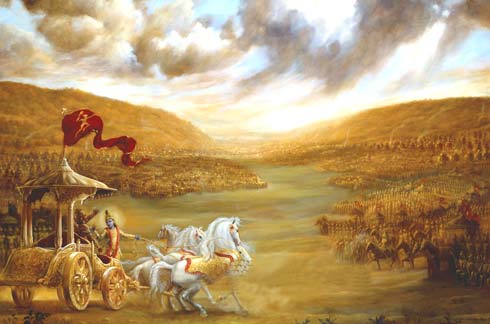
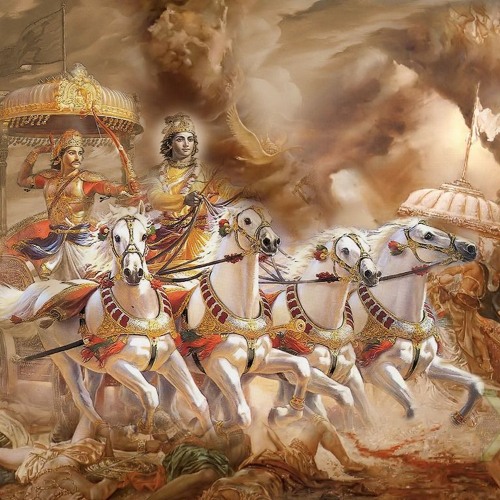
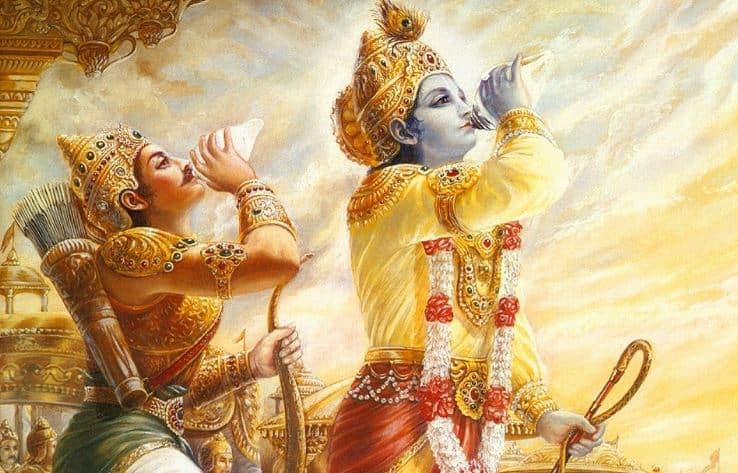
TEXT 19 sa ghoṣo dhārtarāṣṭrāṇāṁhṛdayāni vyadārayatnabhaś ca pṛthivīṁ caivatumulo 'bhyanunādayan SYNONYMSsaḥ—that; ghoṣaḥ—vibration; dhārtarāṣṭrāṇām—of the sons of Dhṛtarāṣṭra; hṛdayāni—hearts; vyadārayat—shattered; nabhaḥ—the sky; ca—also; pṛthivīm—the surface of the earth; ca—also; eva—certainly; tumulaḥ—uproarious; abhyanunādayan—resounding. TRANSLATIONThe blowing of these different conchshells became uproarious. Vibrating both in the sky and on the earth, it shattered the hearts of the sons of Dhṛtarāṣṭra. PURPORTWhen Bhīṣma and…

TEXTS 16-18 anantavijayaṁ rājākuntī-putro yudhiṣṭhiraḥnakulaḥ sahadevaś casughoṣa-maṇipuṣpakau kāśyaś ca parameṣv-āsaḥśikhaṇḍī ca mahā-rathaḥdhṛṣṭadyumno virāṭaś casātyakiś cāparājitaḥ drupado draupadeyāś casarvaśaḥ pṛthivī-patesaubhadraś ca mahā-bāhuḥśaṅkhān dadhmuḥ pṛthak pṛthak SYNONYMSananta-vijayam—the conch named Ananta—vijaya; rājā—the king; kuntī-putraḥ—the son of Kuntī; yudhiṣṭhiraḥ—Yudhiṣṭhira; nakulaḥ—Nakula; sahadevaḥ—Sahadeva; ca—and; sughoṣa—maṇipuṣpakau—the conches named Sughoṣa and Maṇipuṣpaka; kāśyaḥ—the King of Kāśī (Vārāṇasī); ca—and; parama-iṣu-āsaḥ—the great archer; śikhaṇḍī—Śikhaṇḍī; ca—also; mahā-rathaḥ—one who can fight alone…
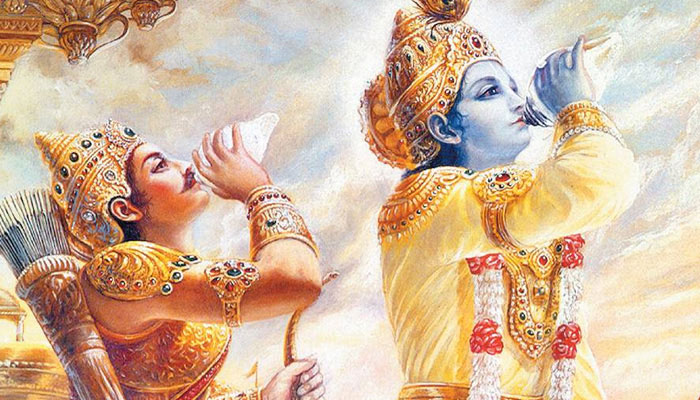
TEXT 15 pāñcajanyaṁ hṛṣīkeśodevadattaṁ dhanañjayaḥpauṇḍraṁ dadhmau mahā-śaṅkhaṁbhīma-karmā vṛkodaraḥ SYNONYMSpāñcajanyam—the conchshell named Pāñcajanya; hṛṣīka-īśaḥ—Hṛṣīkeśa (Kṛṣṇa, the Lord who directs the senses of the devotees); devadattam—the conchshell named Devadatta; dhanam-jayaḥ—Dhanañjaya (Arjuna, the winner of wealth); pauṇḍram—the conch named Pauṇḍra; dadhmau—blew; mahā—śaṅkham—the terrific conchshell; bhīma-karmā—one who performs herculean tasks; vṛka—udaraḥ—the voracious eater (Bhīma). TRANSLATIONLord Kṛṣṇa blew His conchshell, called Pāñcajanya; Arjuna blew his,…


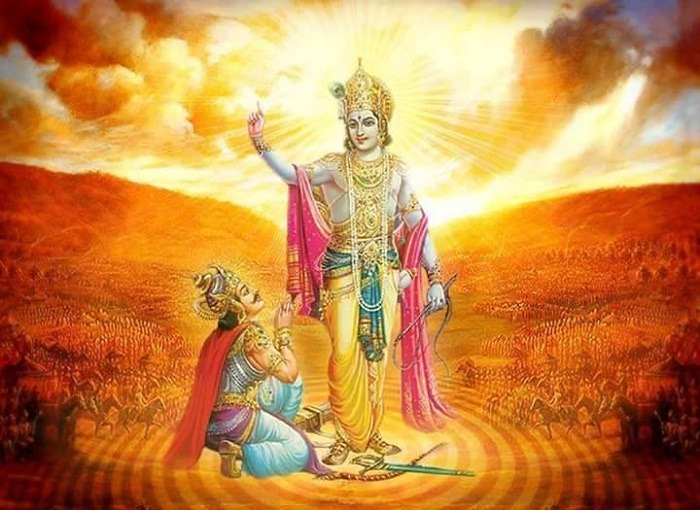
Arjuna submits to Lord Kṛṣṇa as His disciple, and Kṛṣṇa begins His teachings to Arjuna by explaining the fundamental distinction between the temporary material body and the eternal spiritual soul. The Lord explains the process of transmigration, the nature of selfless service to the Supreme and the characteristics of a self-realized person.
Arjuna submits to Lord Kṛṣṇa as His disciple, and Kṛṣṇa begins His teachings to Arjuna by explaining the fundamental distinction between the temporary material body and the eternal spiritual soul. The Lord explains the process of transmigration, the nature of selfless service to the Supreme and the characteristics of a self-realized person.
Arjuna submits to Lord Kṛṣṇa as His disciple, and Kṛṣṇa begins His teachings to Arjuna by explaining the fundamental distinction between the temporary material body and the eternal spiritual soul. The Lord explains the process of transmigration, the nature of selfless service to the Supreme and the characteristics of a self-realized person.
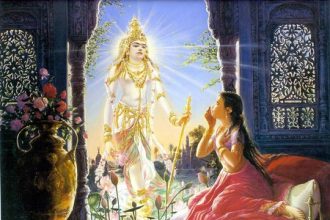
When Tulasī Devī stopped speaking, Lord Brahmā suddenly appeared there. After Śaṅkhacūḍa and Tulasī offered him their respects, Lord Brahmā said, "O Śaṅkhacūḍa! Why are you wasting your time in…