

Prabhupāda: …So still, if we understand that this life is meant for understanding Kṛṣṇa or to advance in Kṛṣṇa consciousness, if this much we understand, then also, our life is successful. But we do not take it seriously. We do not take it seriously. That is the difficulty. Actually, as Narottama dāsa Ṭhākura says, that viṣaya-biṣānale, dibā-niśi hiyā jwale, juṛāite nā koinu upāy, “My heart is always burning on account of this material condition of life, and I did not make any means to get out of this entanglement”… So everyone should be intelligent. Intelligent person will admit that his heart is always burning. That’s a fact. Now, if we want to get out of it, then, as Caitanya Mahāprabhu advises, all the ācāryas advises, and here Arjuna also… Arjuna directly listened to Kṛṣṇa, and he says, “This is my practical experience, that when I…” He was a politician, a fighter. He had so many anxieties. So he used to remember the instruction given by Kṛṣṇa directly to him.
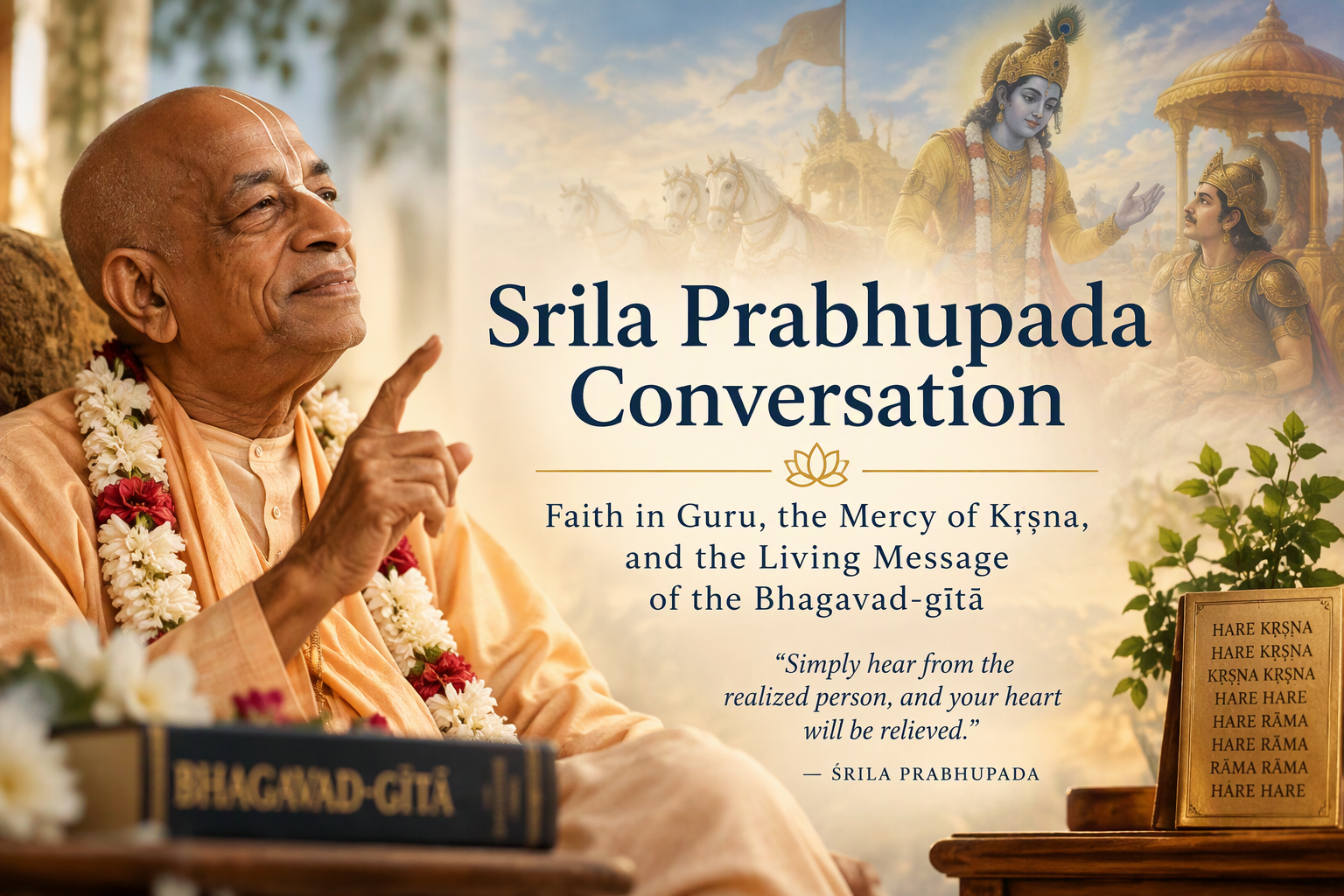
So that instruction and when we read Bhagavad-gītā, that instruction, these two instructions, they are not different. Don’t think that “Kṛṣṇa was present before Arjuna, but in my presence there is no Kṛṣṇa. Simply I have got this book.” But you should know that the book and the instruction there in the Bhagavad-gītā and Kṛṣṇa, they are absolute, one. There is no difference. We can take advantage of Kṛṣṇa’s presence by reading Bhagavad-gītā.
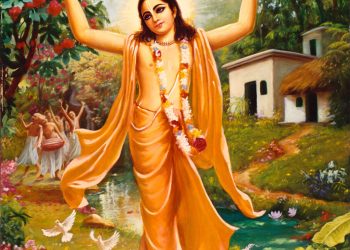
I have narrated several times the story of a brāhmaṇa in South India. He was illiterate, and he was reading Bhagavad-gītā. So his friends, village friends, they knew that “This man is illiterate. How he can read Bhagavad-gītā?” So they were criticizing. “Hello, brāhmaṇa. How you are reading Bhagavad-gītā?” So he did not say anything because he knew that “These friends are criticizing me because I am illiterate. He knows.” So when Caitanya Mahāprabhu came there, Caitanya Mahāprabhu was attracted. He was illiterate, and he was reading Bhagavad-gītā, and Caitanya Mahāprabhu was attracted. Just see. So Caitanya Mahāprabhu inquired, “My dear brāhmaṇa, what you are reading?” So he also could understand that “Here is a person who has not come to criticize me. He is serious.” “Yes, sir, I am reading Bhagavad-gītā, but I am illiterate. I am illiterate.” “Then what you are reading?” “No, I am simply turning the pages. I cannot read anything.” “Then why you are reading if you cannot?” “No, my Guru Mahārāja ordered me. My Guru Mahārāja asked me that ‘You shall read Bhagavad-gītā daily, eighteen chapters.’ ” Guru mahārāja knew that he is illiterate, but still ordered. This is called guru-mukha-padma-vākya, cittete koriyā aikya, ār nā koriho mane āśā **. This is called firm faith in guru. Guru ordered him that “You read.” Guru must know him, that he is illiterate. So what he will read? Why guru is ordering him? But because he had firm faith in guru and he was trying to read, Caitanya Mahāprabhu came to see him. Just see. How this line is important: guru-mukha-padma-vākya, cittete koriyā aikya, ār nā koriho mane āśā. Ār means anything more, you don’t try to understand. Whatever your guru says, you just try to carry it out. So what is the next line? Guru-mukha-padma-vākya, cittete…
Puṣṭa-kṛṣṇa: Śrī-guru-caraṇe rati…
Prabhupāda: Śrī-guru-caraṇe rati, ei se uttama-gati **. Don’t try to make very good advance by manufacturing your own way. Simply, śrī-guru-caraṇe rati, ei se uttama-gati. That is first-class. That is Vedic instruction. Vede gāy jāṅhāra carito. The Vedas says,
yasya deve parā bhaktir
yathā deve tathā gurau
tasyaite kathitā hy arthāḥ
prakāśante mahātmanaḥ
[ŚU 6.23]
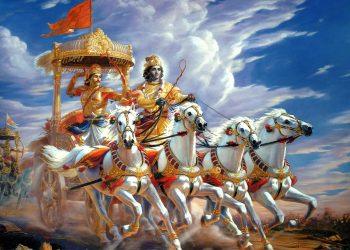
To understand Vedic literature means one must have firm faith in Kṛṣṇa and firm faith in guru, not that “My guru is not so learned, so let me capture Kṛṣṇa directly.” That is useless. That is useless. Caitanya Mahāprabhu says, guru-kṛṣṇa-kṛpāya pāya bhakti-latā-bīja [Cc. Madhya 19.151]. One can get the seed of the plant or creeper of bhakti, how? Guru-kṛṣṇa-kṛpā. By the mercy of guru and by the mercy of Kṛṣṇa, not that kṛṣṇa-kṛpā. First guru-kṛpā, then kṛṣṇa-kṛpā. So this brāhmaṇa attracted the attention of Caitanya Mahāprabhu. He was illiterate, and he could not read even one word. What is the truth in it? The same thing. Guru-mukha-padma-vākya, cittete koriyā aikya. He took guru’s order very seriously, that “My Guru Mahārāja has ordered me, and I must carry out. Never mind I cannot read. Let me open the pages and see. That’s all.” So he was doing that. So others criticized him that “This man is illiterate. What he is reading?” But Caitanya Mahāprabhu did not criticize. Caitanya Mahāprabhu inquired, “Oh, what you are reading, My dear brāhmaṇa?” So he explained, that “This gentleman has not come to criticize me.” So Caitanya Mahāprabhu knew that “He is a perfect knower of Bhagavad-gītā.” Still, He inquired, “Well, if you are not reading, then how you are crying? I see there are tears in your eyes. What is the meaning?” Then he admitted, “Yes, sir. Yes. That is.” “Why you are crying?” “No, as soon as I take this Bhagavad-gītā in my hand a picture comes before me that Arjuna is sitting on the chariot ordering Kṛṣṇa, and Kṛṣṇa, the Supreme Personality of Godhead, is carrying out his order and driving the chariot. So that makes me amazed. Therefore I am crying, that ‘How Kṛṣṇa is merciful, that He accepted a menial service for His devotee. He is so kind.’ ” Caitanya Mahāprabhu immediately embraced him: “Yes, brāhmaṇa, your reading of Bhagavad-gītā is perfect.” So it doesn’t matter whether one is illiterate or literate. Everyone has got these ears. So we should hear from the realized person, guru Vaiṣṇava, not professional, no. That will not help us.
tad viddhi praṇipātena
paripraśnena sevayā
upadekṣyanti te jñānaṁ
jñāninas tattva-darśinaḥ
[Bg. 4.34]
Tattva-darśinaḥ. Tattva-darśinaḥ means one has seen the truth, not superficially knowing. One who understood that this is the truth, so go there and submit there. Praṇipātena. Prakṛṣṭa-rūpeṇa nipātena. Fully surrender there and then question, then try to inquire if you cannot understand. First of all, first business is praṇipāta: “Sir, I surrender unto you.” Śiṣyas te ‘haṁ śādhi māṁ prapannam [Bg. 2.7]. Arjuna also did so. “My dear Kṛṣṇa, we are talking like friends. This will not solve the problem. Therefore I am submitting unto You as Your disciple.” Śiṣyas te ‘haṁ śādhi māṁ prapannam. “I surrender unto You. Now You can teach me.” Because as soon as you accept guru, you have to hear him, surrender, full surrender. You cannot unnecessarily argue. Of course, if there is any doubt, you can question submissively. But not that, “I shall test my guru, how he is learned.” That will not help. One must surrender. So tad viddhi praṇipātena paripraśnena sevayā [Bg. 4.34]. Arjuna did that. Therefore Arjuna learned the Bhagavad-gītā, and it was always relief for him when he was perplexity. Haranti smarataś cittam. Haranti. What is that haranti? Hṛt-tāpa. Hṛt-tāpa, the blazing fire within the heart, within the core of the heart, immediately becomes minimized, haranti. Smarataś cittam. As soon as I remember, my consciousness, my heart, core of heart, becomes immediately relieved. How it is relieved? Why it is relieved? Govinda abhihitāni me: “Govinda instructed.” Govinda means Kṛṣṇa. Govinda means Kṛṣṇa. Govindam ādi-puruṣaṁ tam ahaṁ bhajāmi **. Govinda.
īśvaraḥ paramaḥ kṛṣṇaḥ
sac-cid-ānanda-vigrahaḥ
anādir ādir govindaḥ
sarva-kāraṇa-kāraṇam
[Bs. 5.1]
Govinda is sarva-kāraṇa-kāraṇam. So that Govinda is instructing to Arjuna personally. How fortunate is Arjuna. But Kṛṣṇa is so kind that if you actually serious to understand… So just like this brāhmaṇa took instruction from his spiritual master and began to read Bhagavad-gītā, and he realized what is Kṛṣṇa, what is Govinda, similarly, if we take seriously the instruction of our spiritual master and try to read Bhagavad-gītā according to his instruction, then gradually we shall realize Kṛṣṇa. And if you simply realize Kṛṣṇa, what is Kṛṣṇa… That is not difficult. Kṛṣṇa is personally speaking about Himself. You haven’t got to speculate like nonsense. Just like Gandhi speculated, “I do not believe that ever any person like Kṛṣṇa lived.” Do you know that? This is Gandhi’s statement, and he is mahātmā. The mahātmā’s definition is there in the Bhagavad-gītā: mahātmānas tu māṁ pārtha daivīṁ prakṛtim āśritāḥ, bhajanty ananya-manasaḥ [Bg. 9.13]. That is mahātmā, not to take advantage of Bhagavad-gītā. Of course, there are… So we do not want to criticize anyone, but sometimes it so happens. Big, big scholars, big, big politicians, they misguide people. That is the position of India. So many big, big leaders and politician and so-called swamis and yogis, they have exploited people by bluffing, and now India’s position is: it is neither spiritual nor material. (laughter) That’s all. Dhuno ke pap.(?)
Just like it is, the example is, if there are two boats and if you place your leg this boat and that boat, the position is very precarious. (laughter) Neither in this boat, neither that boat. Fully. So our position is that. We are learning technology, and the western countries, they are advanced in technology always hundred years more. Some years ago there was a big exhibition in Delhi. The show was that India had manufactured cycle and sewing machine. That is their proud. The cycle, I think, two hundred years ago (laughs) was manufactured in the western countries and so also sewing machine. So India was very much proud, that “Now we have got cycle.” When they are manufacturing big, big 747 airplane, we are manufacturing cycle. (laughter) Just see. Medicine also. Technology, that is also technology. They are advanced in… They were meant for this… They have got brain. They can advance in material civilization because fully… So we cannot compete. We cannot compete, although it is, this technology is the business of the śūdras. Technology is not the occupation for the brāhmaṇas, kṣatriyas, or vaiśyas, no. In our country still, there are blacksmith, weaver, oil crusher. Still they are in the village. But they are śūdras. So this technology means craftsmanship. That is not knowledge. That is not knowledge. Just like I do not know how this microphone is working. If it is wrong, some man who knows the art, he repairs it immediately. That does not mean he has got knowledge. That particular department, he has got knowledge, that’s all. Knowledge means that one who knows God. That is knowledge. Bahūnāṁ janmanām ante jñānavān māṁ prapadyate [Bg. 7.19]. This is knowledge. So the western countries, they have taken-advancement of knowledge means manufacturing a big motor car. That’s all. That is also good. But simply for manufacturing motor car, simply for driving motor car, if we forget our real business, God realization, then it is ruinous. Mūḍha. Mūḍha, then we become mūḍha.
This life, human life, it is not cats’ and dogs’ life. It is human life. Athāto brahma jijñāsā. One can realize the Absolute Truth if he is inquisitive.
Source: 07. Lectures (1,989 Tape Transcriptions), Śrīmad-Bhagavatam Lectures, Canto 1: Lectures, SB 1.15: Lectures, Śrimad-Bhagavatam 1.15.27 -- New York, March 6, 1975, 750306SB.NY